Utility trenches, damaged slab removal, drain openings, doorway cuts - we make clean diamond-blade cuts and leave the site the way we found it.
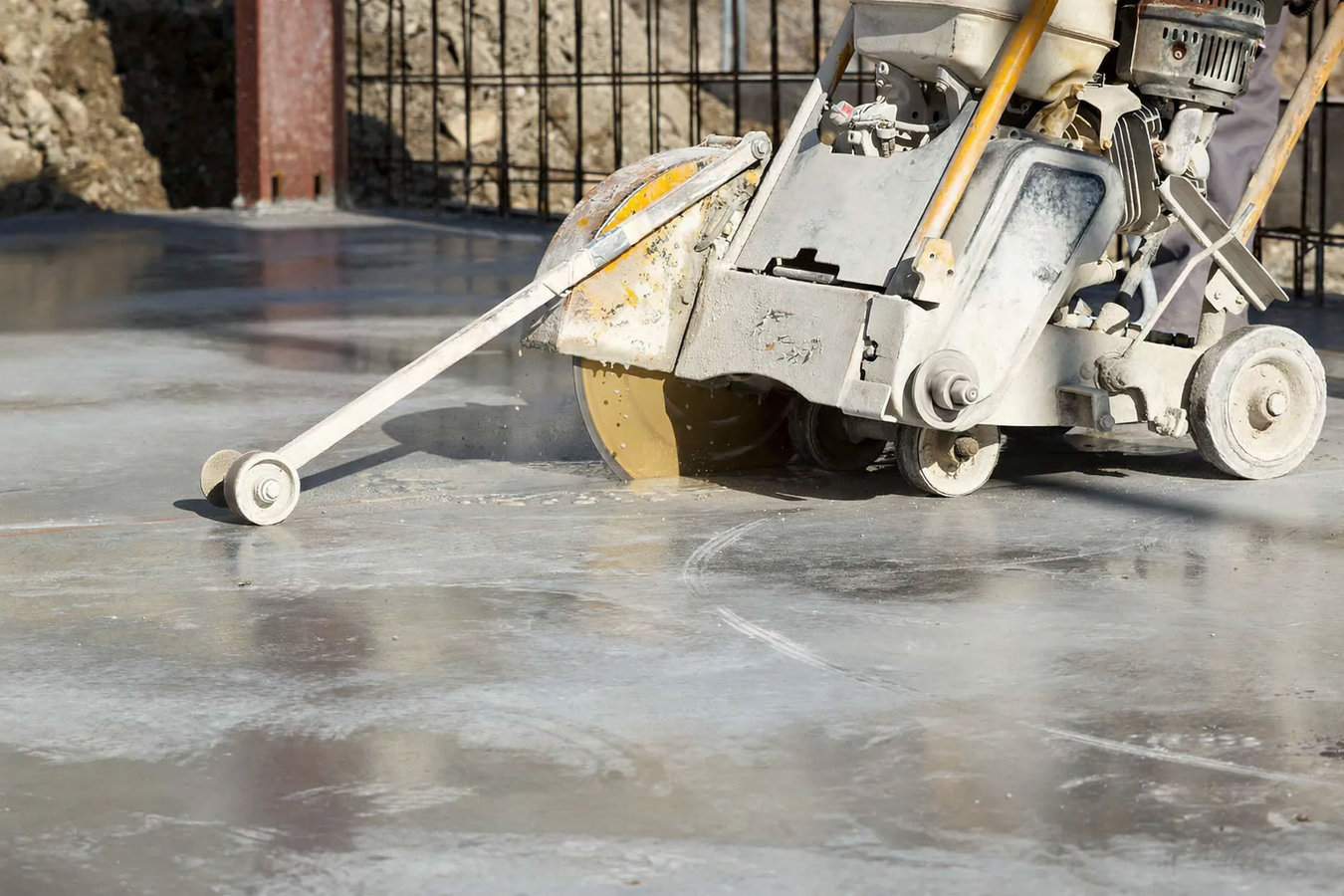
Concrete cutting in Petaluma uses diamond-tipped saw blades to slice through hardened slabs cleanly and precisely - most residential jobs are completed in a few hours to a full day, with the site left clean afterward.
When a plumber needs to run new drain lines under your slab, when a section of your driveway needs to come out, or when you are adding a doorway through a garage foundation, a concrete cutter comes in first to make a clean, controlled opening. The difference between a professional cut and a rough break matters - clean edges support the new framing, pipe, or pour that follows. If the work you are planning leads to new concrete afterward, concrete floor installation handles the pour that fills the opening once your other trades are done.
Petaluma's older housing stock adds a layer of complexity that newer cities do not have. Homes built in the 1940s through 1970s were often poured over unmarked utilities, and the slabs themselves vary in thickness in ways that are not always predictable from the surface. A contractor who calls 811 before every job and checks slab depth before committing to blade depth avoids the scenario where a saw finds a pipe you did not know was there.
These are the most common situations that bring Petaluma homeowners to a concrete cutting contractor.
If cracks in your driveway or patio look slightly bigger each spring than they did the fall before, Petaluma's wet winters are accelerating the damage. Cutting new control joints into the slab can redirect stress and stop the cracking from spreading further before another rainy season makes it worse.
Standing water collecting against your house after a storm is a drainage problem. Cutting a trench drain into the concrete around your foundation or driveway apron redirects that flow before it causes moisture damage to the foundation or crawl space. Left unaddressed, pooling water leads to far more expensive repairs.
If a plumber has told you they need to open the slab to run new drain lines for a bathroom or laundry room, a concrete cutting crew needs to come in first. This is one of the most common jobs in Petaluma's older neighborhoods, where original plumbing was not designed for how the house is used today.
If you are adding a door through a garage wall or widening an opening where the wall sits on a concrete stem wall, that foundation needs to be cut to the exact width before framing can begin. Precision matters here - the cut has to support the new door frame without compromising the surrounding structure.
We use diamond-blade saws sized to the job - walk-behind flat saws for slab cuts on driveways and garage floors, hand-held saws for tighter spaces, and wall saws when the cut needs to go through a foundation wall or elevated structure. Every cut uses wet cutting: a steady water supply cools the blade and suppresses the silica dust that is a real health hazard if left airborne. We manage and remove all slurry from the site before we leave.
Cutting is often the first step in a larger project. After a utility trench is cut and the plumber finishes, the opening is patched. After a doorway is cut through a foundation, the framer builds the new opening. When those follow-on pours are needed, we handle concrete driveway building and concrete floor installation so you can work with a single contractor through the full sequence rather than coordinating multiple crews.
Before any saw touches your concrete, we call 811 to have underground utilities marked. On the day of work, we mark cut lines clearly, probe slab depth, and set up equipment protection. A contractor who skips these steps is guessing about what is beneath your slab - and guessing with a diamond saw is how you hit a buried pipe.
Best for homeowners adding plumbing, electrical conduit, or drainage lines under an existing slab.
Best for removing cracked, heaved, or damaged concrete sections for replacement rather than patching.
Best for garage conversions, new doorways, and any opening through a concrete stem wall or foundation.
Best for slabs that are cracking without joints, redirecting stress before damage spreads further.
A large share of Petaluma's residential neighborhoods - particularly around the older east side and downtown-adjacent areas - were built in the 1940s through 1970s. Concrete work from that era was often poured without the detailed utility mapping that is standard today. Old clay drain pipes, unmarked electrical conduit, and hand-dug trenches are common finds under slabs in these neighborhoods. A contractor who calls 811 and probes depth before committing to a blade protects you from the expensive scenario of a saw finding something that was not supposed to be there.
Petaluma also gets most of its roughly 25 inches of annual rainfall between November and March, which means timing matters for any cut that will be followed by a concrete patch. New concrete poured into a freshly cut opening needs dry conditions to cure properly. Homeowners in Cotati and Rohnert Park face the same seasonal constraints, and scheduling cuts during the dry season, May through October, gives any follow-on concrete the best chance to cure fully before the rains return.
Sonoma County's active seismic zone adds a requirement for some foundation cuts: the City of Petaluma may require a structural engineer's sign-off when a cut affects a load-bearing slab or foundation wall. This is not bureaucratic friction - it is protection for you at resale, since a foundation weakened by an unpermitted cut is a liability that shows up in inspection reports. Homeowners in Santa Rosa face the same permit requirements for structural concrete work, and the process is the same: your contractor pulls the permit and coordinates any required engineer review before a saw goes in.
We ask what you are trying to accomplish, where the concrete is, and roughly how thick the slab is. These questions help us show up with the right equipment and give you a price that will not change on the day of the job. You hear back within one business day.
We visit the site, assess slab thickness and access, check for utility access points, and give you a written estimate covering the cut, slurry cleanup, and haul-away. Nothing starts until you have a number you agreed to in writing.
If your project triggers a City of Petaluma permit - foundation cuts, new drain trenches, structural openings - we handle the application. Expect one to three weeks for residential permits. We will never suggest skipping a permit to save time.
Before any saw runs, we have underground utilities marked. The cutting is loud and produces slurry we manage continuously. When the work is done, the site is clean and the cut edges are straight. We walk you through what was done and what comes next.
Licensed California contractor. Written estimates. 811 called before every job.
(707) 600-3389We have cut through slabs in Petaluma's 1950s and 60s-era neighborhoods enough times to know what to look for before the saw goes in. Unmarked utilities, hand-poured footings, and variable slab thickness are not surprises to us - they are things we check for on every job in these neighborhoods.
Some contractors skip the utility marking call to save a day. We do not. California's free 811 service marks gas, water, and electrical lines before any cut, protecting you from the liability of a damaged utility and protecting the crew from the hazard of cutting into a live line. There are no exceptions to this on our jobs.
Petaluma's building department requires permits for cuts that affect foundations, drainage, or structural walls. We know which projects need permits, we handle the application on your behalf, and we build the permit timeline into your project schedule from day one. You will not get a call mid-project telling you work has to stop.
Concrete cutting produces a wet, gritty slurry that can stain driveways and clog street drains if it is not managed. We contain and remove all slurry as part of every job. When we leave, the work area looks the way it did when we arrived - minus the problem you called us about.
The work we do here has to meet both local building requirements and national safety standards for silica dust exposure. The OSHA silica standard requires contractors to use wet cutting methods and proper dust controls on every concrete cutting job, and the Portland Cement Association sets best practices for blade selection and cut quality. When you hire us, you get a crew that follows both - not because inspectors might show up, but because it is the right way to do the work.
After the cut is done and your other trades have finished, we pour and finish new concrete floor sections to match the existing slab.
Learn moreWhen a section of driveway needs to be replaced rather than just cut, we handle the full pour from subgrade preparation to surface finishing.
Learn moreConcrete cutting in Petaluma is faster and less expensive than most homeowners expect - and acting during the dry season means any new concrete has time to cure before the first fall storms arrive.