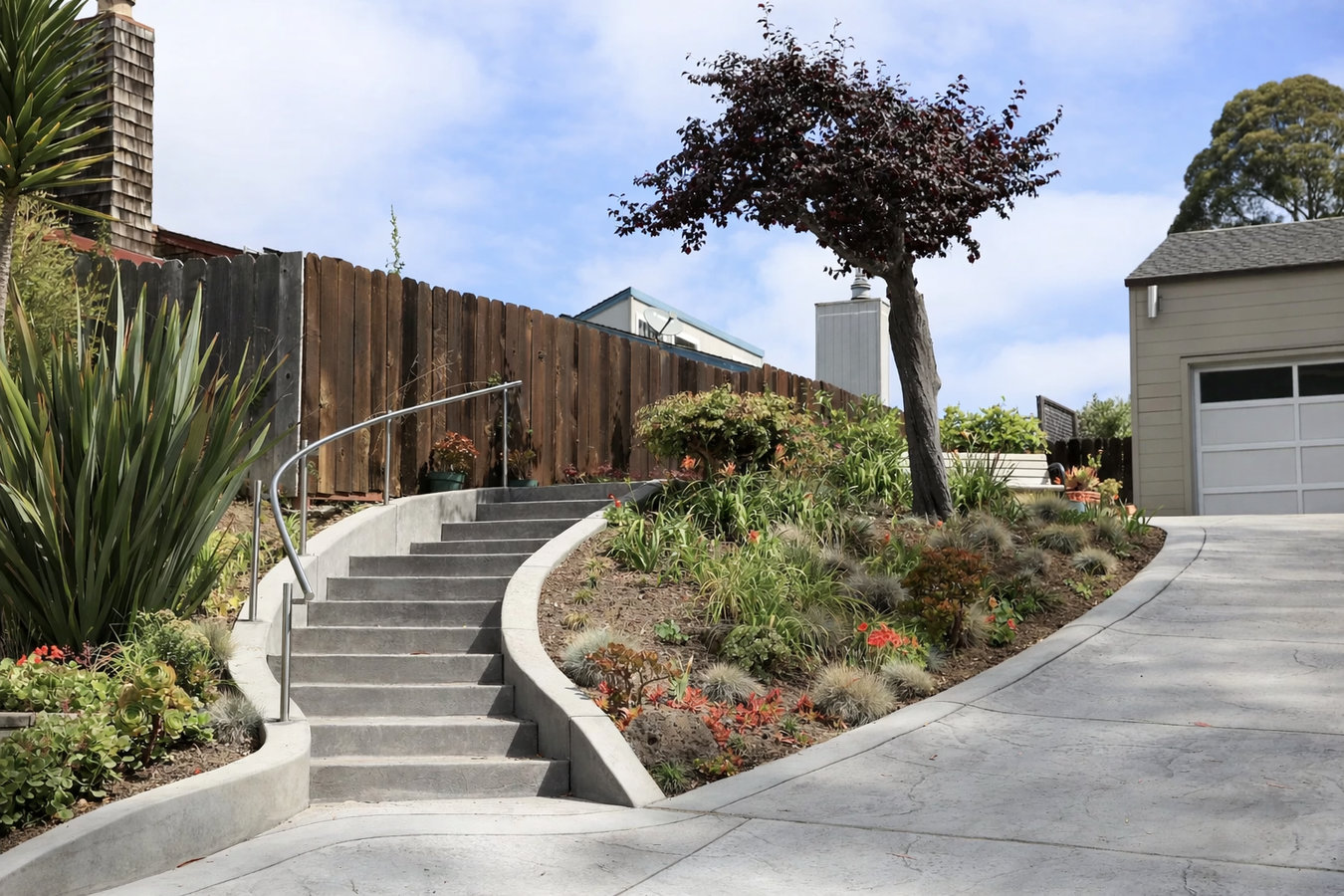
Cracked, tilted, or slippery front steps are a safety problem, not just an eyesore. We build concrete steps in Petaluma that handle the local clay soil, wet winters, and foggy mornings without crumbling or shifting over time.
Concrete steps construction in Petaluma takes one to two days of active work, with a curing period of 24 to 48 hours before use - most standard three-to-five step front entry replacements run between $1,500 and $4,500 depending on size, finish, and whether demolition is included.
Many homes in Petaluma's older west side neighborhoods were built before 1960, and a large share of them have original concrete or brick steps that have been patched multiple times. At some point, patching stops making sense. New concrete steps with proper base preparation will not repeat the cracking and tilting problems that come from clay soil movement. Homeowners who are also updating their walkway often pair this work with concrete sidewalk building to give the entire front entry a consistent look.
The City of Petaluma requires a building permit for most attached concrete step replacements. We file that permit for you, coordinate the inspection, and do not call the job done until the city signs off.
If cracks in your steps have gotten bigger since last year, the structure underneath is shifting. In Petaluma, the clay soils that expand and contract with the rainy season are a common cause of this kind of progressive cracking. A crack wide enough to fit a coin into is worth having a contractor look at - it will not heal on its own.
When corners and edges start breaking off in chunks or flaking away in thin layers, the concrete has begun deteriorating from the inside out. This is especially common on older Petaluma homes where the original steps were poured with a mix not designed to handle decades of wet winters. Patching buys time but rarely solves the underlying problem.
If you can see a gap between your steps and the front door threshold, or the steps visibly slope to one side, the foundation beneath them has shifted. This is both a tripping hazard and a sign that water may be getting into the gap and causing further damage. Steps in this condition should be replaced, not patched.
If your steps feel slick on damp mornings and scrubbing does not help, the surface texture has worn smooth. Petaluma's coastal fog keeps front entries wet from October through May most years. A worn, smooth surface is a fall risk, especially for older family members. New steps with a textured finish will be noticeably safer year-round.
We build front entry steps, back porch steps, and exterior stair connections of all sizes. Every project starts with removing the old steps if needed, then preparing the ground properly - compacting the base, adding a gravel layer, and confirming the soil is stable before any concrete is poured. Skipping that preparation step is the most common reason steps crack and tilt prematurely in this area.
Surface finish matters on steps more than almost any other concrete surface because they are used every day in all weather. For most Petaluma homes, we recommend a broom finish or exposed-aggregate finish because both stay grippy when wet. When homeowners want something more decorative, stamped concrete can achieve the look of stone or brick while keeping the surface texture safe. Homeowners who want a consistent look from the street to the door often combine steps with concrete sidewalk work in a single project.
For entries that involve a significant grade change or retaining a sloped yard alongside the steps, we also build concrete retaining walls that hold the soil back cleanly and give the entire entry a finished, intentional appearance.
Suits homeowners whose existing front steps are cracked, tilted, or past the point of patch repairs.
Suits homeowners adding steps to a new porch landing or replacing a non-concrete entry.
Suits homeowners who prioritize slip resistance and safety for daily use in damp conditions.
Suits homeowners who want a decorative stone or brick appearance with the durability of poured concrete.
Petaluma gets most of its rain between November and March, and concrete cannot be poured in heavy rain or near-freezing temperatures without risking a weak, crumbly result. The practical pouring window runs from late April through October. If you are planning a project, booking in spring gives you the best chance of good curing weather and a contractor who is not already fully booked. Many homeowners on Petaluma's historic west side - where homes built before 1960 are common - wait too long in the season and end up pushing their project to the following year.
Much of the Petaluma Valley sits on clay soils that swell with winter rain and shrink back through the dry summer. That seasonal movement is the most common reason concrete steps crack or tilt in this area. A contractor who understands local soil conditions will compact the base carefully and may add a thicker gravel layer beneath the concrete to buffer against that movement. Homeowners in Rohnert Park and Sonoma face the same clay soil challenge, and we use the same preparation approach across all three markets.
Petaluma's proximity to the coast means mornings are frequently foggy and damp, even in summer. Smooth concrete surfaces can be dangerously slippery in these conditions - a real concern for front entry steps that are used every day. We default to broom-textured or exposed-aggregate finishes for this reason. Homeowners in coastal communities like Novato have the same fog pattern and face the same finish decision.
Tell us how many steps, where they are located, and whether old steps need to come out. We reply within one business day and schedule a site visit - accurate pricing requires seeing the ground conditions in person.
We walk the site, check the soil and slope, and discuss finish options. We file the City of Petaluma building permit for you - for most attached step projects, the permit review takes a few days to two weeks.
We remove old steps, haul debris, compact the base, and set a gravel layer. Then we build the form, pour the concrete, and apply your chosen finish. The full process is typically done in one day.
Stay off the steps for 24 to 48 hours after the pour. Once cured, the city inspector visits to sign off on the work. We do a final walkthrough with you, explain ongoing care, and confirm the steps drain properly.
We walk the site before we quote. The price you agree to is the price you pay.
(707) 600-3389We file the City of Petaluma permit, track its progress, and schedule the city inspection before the job is called complete. Skipping permits is a contractor red flag and creates problems when you sell your home.
We compact the base and lay a gravel layer before the pour on every job. That preparation step is what separates steps that last 25 years from ones that crack by the third rainy season. It takes more time, but it is the only way to build in Petaluma.
We work across Petaluma, Rohnert Park, Novato, Sonoma, and eight other North Bay cities. That range means we understand permit requirements across multiple jurisdictions and bring that knowledge to every project.
We recommend textured finishes specifically because of Petaluma's coastal fog pattern. The California Department of Housing and Community Development publishes stair safety standards we follow on every job.
We are a licensed California contractor. Verify our license and check our standing with the California Contractors State License Board before you hire anyone for this work. It takes two minutes and gives you peace of mind before any contracts are signed.
Pair new front entry steps with a matching concrete sidewalk for a complete, consistent street-to-door entry.
Learn moreHold back a sloped yard next to your steps with a concrete retaining wall built for Petaluma's clay soil conditions.
Learn morePetaluma's pouring season books up fast in spring. Reach out now so you are not waiting until fall.