You need a foundation that holds up to Petaluma's clay soils, wet winters, and seismic requirements - not a one-size pour that starts cracking before the framing goes up.
Slab foundation building in Petaluma means pouring a single, reinforced concrete base directly on prepared ground - most residential jobs take two to five days on site, with a full permit-and-inspection cycle of three to six weeks from first call to approved slab. The concrete itself needs 28 days to reach full strength before framing begins.
Petaluma's heavy clay soils make foundation work more demanding than in areas with sandier ground. The clay swells when wet and shrinks when dry, creating ongoing stress on any concrete that was not designed with that movement in mind. Skipping proper site prep - extra gravel, a vapor barrier, correctly placed rebar - is the single most common reason Petaluma slabs develop problems within the first few years.
If you are planning a garage conversion or a new accessory dwelling unit, you will also want to review our foundation installation page to understand the full scope of what a new structure requires. The sooner you start the permit process, the better your chances of a dry-season pour.
If you are building a garage, ADU, workshop, or home addition in Petaluma, you need a new slab foundation before any framing can begin. Even a modest backyard structure needs a proper concrete base to stay level, dry, and structurally sound over time.
Small hairline cracks in concrete are common and usually harmless. But if you notice cracks wider than a pencil tip, cracks where one side is higher than the other, or cracks that seem to be getting longer, the slab beneath you may be moving. In Petaluma, this is often tied to clay soils expanding and contracting through wet and dry seasons.
When a foundation shifts, the frame of your house shifts with it. The first place you will notice it is doors and windows that suddenly do not close the way they used to. If you are seeing this in multiple spots around your home, especially after a wet winter or a long dry summer, have a contractor look at your foundation.
If water consistently sits against the base of your home after storms, it is working against the concrete over time. You might notice damp spots on interior floors, a white chalky residue on the foundation exterior, or soft soil that never fully dries near the base of your home. These are signs that drainage around your slab is not working.
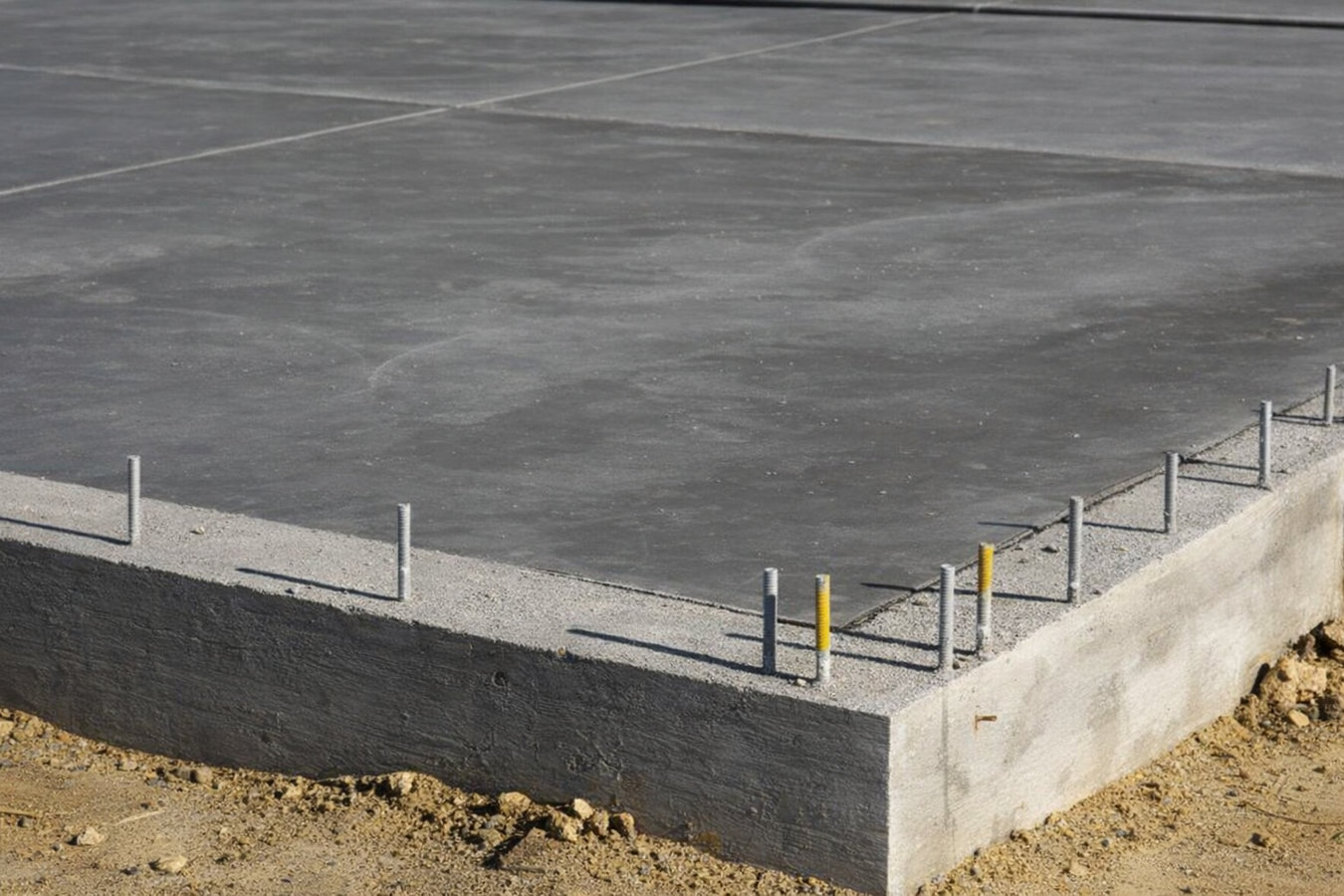
Every slab we build starts with a site visit and a written scope of work - no phone quotes, because soil conditions, lot access, and existing structures all affect the price and approach. We handle excavation, gravel base, vapor barrier, steel reinforcement, the pour itself, and all required City of Petaluma permit inspections. The result is a foundation with documentation you can hand to a future buyer.
Homeowners building accessory dwelling units are among our most common clients right now. Petaluma has seen a significant increase in ADU construction, and the foundation is the one part of that project you cannot go back and fix inexpensively. We also work alongside homeowners replacing old slabs - especially in properties where the original pour predates current seismic and moisture requirements. For structural support work beneath an existing slab, see our concrete footings page.
Once the slab passes its final inspection, framing or other construction can begin. We also address drainage around the new foundation so water from Petaluma's winter rains moves away from the structure rather than pooling against it.
Suits homeowners building a garage, ADU, or full home addition on a bare lot with no existing foundation.
Suits properties where an old, cracked, or non-compliant slab needs to be removed and replaced to current code.
Suits homeowners converting sheds, workshops, or older structures that lack a proper permitted foundation.
Much of Petaluma sits on the clay-rich soils of the Petaluma Valley, and that soil does something predictable every year: it swells during the November-to-March rainy season, then contracts again as the summers dry out. That cycle puts a slow, continuous stress on any foundation that was not designed for it. The gravel drainage layer, the vapor barrier, and the steel reinforcement grid inside a properly built slab are not add-ons - they are direct responses to what Petaluma's ground actually does. According to the California Geological Survey, Sonoma County's clay-heavy soils rank among the most expansive in the state.
The seismic context matters too. Petaluma sits in a region with multiple active fault systems, and California's building code requires that foundations here be reinforced to handle ground movement - not just bear static weight. The Portland Cement Association publishes slab-on-ground standards that guide how this reinforcement is specified. A city inspector confirms the steel is in place before concrete is poured - so you have a third party's sign-off before anything gets buried.
We regularly work across Petaluma's distinct neighborhoods. Homeowners on the west side near the historic downtown often have older properties with mixed soil conditions - lots that have been disturbed, filled, or never properly tested before earlier structures went up. On the east side, newer subdivisions in areas like Cotati and Rohnert Park also have clay-heavy soil profiles, and homeowners there face the same foundation challenges. In Novato, farther south in Marin County, we see similar soil conditions and the same need for properly drained, reinforced slabs.
We visit the site in person before giving you a number. We look at the soil, the slope, equipment access, and any existing structures. You receive a written estimate covering site prep, materials, labor, and whether permit fees are included or billed separately.
We apply for the required City of Petaluma building permit - typically a one-to-three-week process depending on project complexity. You do not need to visit the building department. Once approved, you get a confirmed start date.
The crew excavates, levels, and compacts the soil, then places the gravel base, moisture barrier, and steel reinforcement. A city inspector visits before any concrete is poured to confirm the reinforcement layout meets code.
Concrete trucks arrive early. The crew spreads, levels, and finishes the surface before the mix sets. The slab is walkable in 24 to 48 hours and reaches full strength over 28 days. A final city inspection closes out the permit - you keep that paperwork.
We respond within 1 business day. No commitment required for an estimate.
(707) 600-3389We manage every permit application, inspection scheduling call, and piece of paperwork with the City of Petaluma Building Division. You do not make a single call to the building department - just get updates from us until the permit is closed.
Clay-heavy soil in the Petaluma Valley swells every wet season and shrinks every dry summer. We add appropriate gravel drainage layers, adjust slab thickness, and account for that movement before pouring - not after cracks appear.
Petaluma sits near the Rodgers Creek fault system. Every slab we build includes the steel reinforcement grid required by California code for seismically active areas. The city inspector confirms it before the pour - giving you third-party verification.
Most of Petaluma's rain falls between November and March. We plan pour windows between late spring and early fall to protect the slab from saturated soil and weather-related curing problems. If timing needs to shift, we tell you before you commit.
Petaluma's combination of clay soils, a 25-inch annual rainfall, and proximity to active fault systems means slab foundation work here demands more preparation than a generic pour. Every project we take on is designed specifically for those local conditions - and every job closes with a final city inspection that gives you documented proof the work was done correctly. That level of documentation is what separates a qualified concrete slab contractor from a general laborer who just shows up with a truck.
Full foundation installation for new builds and additions, from excavation through final city inspection.
Learn moreStructural concrete footings that anchor walls, posts, and slabs to stable ground below the frost and clay movement zone.
Learn moreClay soils and wet winters will test any foundation - let us make sure yours is ready before the rains return. Call or submit a request today.