Petaluma's clay soil shifts every wet season. Your foundation needs to be designed for it from day one - not patched after the first winter cracks appear.
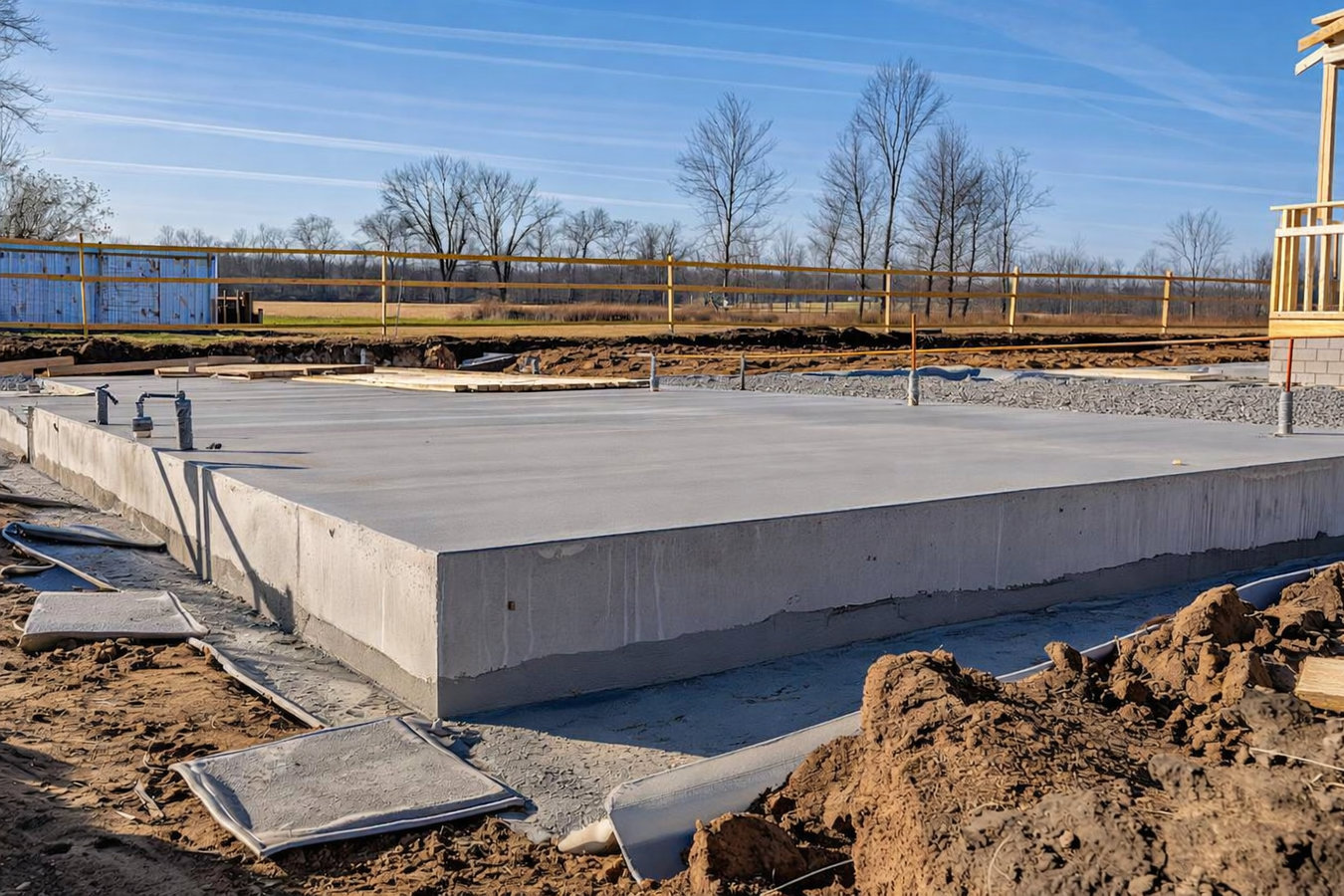
Foundation installation in Petaluma covers everything from excavation through the concrete pour and final city inspection - most residential projects run one to two weeks of on-site work, with a full permit-and-inspection cycle of four to eight weeks from first call to approved foundation. The concrete needs 28 days to cure fully before structural loading begins.
The most common foundation types for Petaluma homes are concrete slabs poured directly on prepared ground, raised foundations with a crawl space underneath, and footings with stem walls for additions or ADUs. Your contractor will recommend the right type based on your lot, your soil, and what you plan to build. Soil conditions here - primarily clay-heavy and seismically active - shape that decision significantly.
If you are building a new accessory dwelling unit or expanding an existing structure, also review our slab foundation building page, which covers the specific requirements for slab-on-ground construction in Petaluma. For additions and remodels requiring a raise of the existing structure, see our foundation raising page.
If you notice new cracks in your interior walls - especially diagonal cracks near door and window corners - in the months following a wet Petaluma winter, your foundation may be moving with the soil. Small hairline cracks are common and not always serious, but cracks wider than a quarter-inch or that grow over time deserve a professional look.
When a foundation shifts, even slightly, door and window frames can go out of square. If doors that used to swing freely now drag on the floor, or windows have become difficult to open and close, the problem may be starting at the foundation level. This is especially common in older Petaluma homes where the original foundation was not built for local soil movement.
Gaps where your walls meet the ceiling, or where baseboards have pulled away from the floor, suggest parts of your home are moving in different directions. This kind of separation is a sign the structure is no longer sitting level and stable. Have a foundation professional look at it before the movement gets worse.
If you are planning to add a room, garage, accessory dwelling unit, or any other structure to your Petaluma property, you need a new foundation for that structure. This is not a sign of a problem - it is simply the starting point for any new construction. Getting the foundation right at the beginning is far less expensive than correcting problems after framing begins.
Every foundation installation starts with a site visit. We assess the soil, the lot grade, any existing structures nearby, and equipment access before giving you a written estimate. We handle permitting with the City of Petaluma Building Division, schedule all required inspections, manage the excavation, and pour the foundation. You receive a fully permitted project with documented inspection approvals when the work is done.
For homeowners with older Petaluma properties - especially in the west side Victorian and Craftsman neighborhoods - we do a thorough assessment before finalizing any price. Foundations in homes built before the 1950s can hide surprises: unusual footings, materials that require special handling, or configurations that affect the scope of work. We find those things during the site visit, not halfway through the project. For structural support beneath existing foundations, see our slab foundation building service for full replacement options.
After the foundation passes final inspection, we grade the soil around the structure to direct water away from the concrete - critical in Petaluma's wet winters. Proper drainage is not optional; it is what separates a foundation that lasts decades from one that starts deteriorating in the first few years.
Suits homeowners building a new home, major addition, or ADU on a prepared lot in Petaluma.
Suits older Petaluma properties where the existing foundation pre-dates current seismic and moisture standards and is causing visible structural problems.
Suits homeowners extending an existing structure and needing a new foundation poured to connect seamlessly with the current building.
Petaluma sits on clay-rich soil that does something every year without fail: it swells during the rainy season and shrinks when the summers dry it out. According to the California Geological Survey, Sonoma County's soils include some of the most expansive clays in the state - the kind that can push against a foundation with hundreds of pounds of force per square foot as they absorb winter rain. A foundation that was not designed for that movement will show problems within a few years. This is why soil assessment, drainage design, and reinforcement selection are not optional extras in this area - they are the core of what makes a foundation work here.
The seismic environment compounds the challenge. Petaluma sits near multiple active fault systems, and the California Department of Housing and Community Development enforces building standards that require foundations in this region to be reinforced to handle ground movement - not just bear static loads. The city inspector who visits before the pour is there specifically to confirm that standard is being met. That inspection is your protection.
We work throughout the North Bay, including areas with similar soil and seismic profiles. In Santa Rosa, the older housing stock and clay valley soils create the same challenges we see on Petaluma's west side. In Napa, expansive clay conditions are similarly common in the valley floor neighborhoods. And in Sonoma, homeowners on older properties face the same combination of clay soil movement and seismic code requirements that we handle every week in Petaluma.
We visit the property before giving you any number. We assess the soil, the lot grade, existing structures, and equipment access. You receive a written estimate that breaks down excavation, materials, labor, and whether permit fees are included or billed separately. We respond within 1 business day.
We submit the building permit application to the City of Petaluma Building Division on your behalf - typically a one-to-three-week process. You do not contact the building department. Once approved, you get a confirmed start date and a project timeline that accounts for inspection scheduling.
The crew excavates to the required depth, removes organic material, and sets up the forms that shape the foundation. Steel reinforcement is placed inside the forms before any concrete is poured. A city inspector visits to confirm the steel layout is code-compliant - this step cannot be skipped.
Concrete is poured in a single day for most residential foundations. After the pour, the concrete cures for at least a week before forms are removed, and the full 28-day cure period applies before structural loading. A final city inspection closes the permit - you receive the approved permit card to keep with your property records.
We respond within 1 business day. Site visits are free and there is no commitment required.
(707) 600-3389We handle every step of the City of Petaluma permit process - application, inspection scheduling, and permit card handoff. You do not make a single call to the building department, and when the project closes you have fully documented, permitted work that protects your home's resale value.
Many Petaluma homes were built decades ago, and older foundations often have non-standard footings or unusual materials. We do a thorough site assessment before finalizing the price - so the number you agree to is the number you pay, not a starting point that grows when we open the ground.
Petaluma's proximity to active Northern California fault systems means California's seismic reinforcement requirements apply to every foundation we pour. The steel inside your foundation is verified by a city inspector before the concrete goes in - giving you third-party confirmation the work meets code.
Petaluma averages around 27 inches of rain per year, most of it between November and March. Pouring concrete in wet conditions weakens the result. We plan foundation pours for the dry season and tell you honestly if the timing needs to shift - before you commit to a start date.
Foundation work in Petaluma is not the same as foundation work in a city with sandier soil and lower seismic risk. Every project we take on is designed specifically for the conditions here - clay soil movement, Petaluma's 25-inch annual rainfall, and California's seismic reinforcement requirements - and every project closes with a city inspection that gives you documented proof it was done to code.
Slab-on-ground foundation pours for garages, ADUs, and new construction, engineered for Petaluma's clay soils and seismic zone.
Learn moreLifting and stabilizing existing foundations on older Petaluma homes where the original structure has settled or needs seismic upgrades.
Learn moreThe ideal pour window in Petaluma runs from spring through early fall. Call now or submit a request to get your permit process started while the timing is right.